The 2026 Strategy: How an AI Agent is Redefining Business Execution
In the landscape of 2026, the digital divide is no longer defined by who uses artificial intelligence, but by how they use it. We have moved past the era of static chatbots into the era of the AI agent. By definition, this is an autonomous software system powered by a Large Language Model (LLM) that possesses the ability to understand high-level goals, reason through multi-step tasks, and utilize digital tools to achieve measurable outcomes.
Unlike traditional AI that requires constant "prompting" for every single word, a modern autonomous system operates within the heart of your business workflows. It doesn’t just assist; it operates.
For a deeper look at how these systems are used in real content production workflows, see our guide on AI video tools in modern marketing systems.
The Five Core Capabilities of a True AI Agent
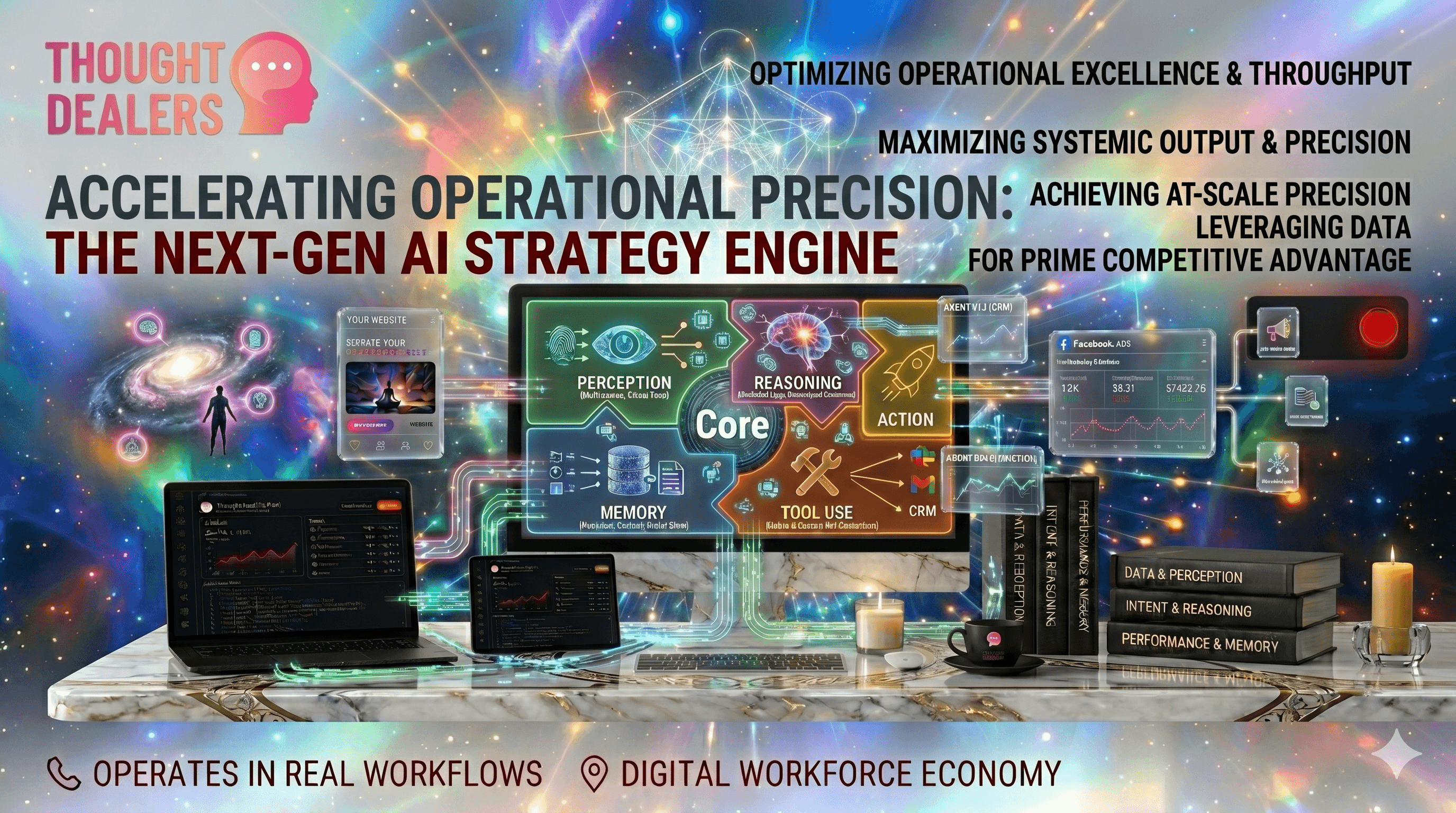
To understand why an intelligent operator is superior to a standard chatbot, one must look at the five architectural pillars that allow for true autonomy:
- Perception: A digital worker can ingest massive streams of data from the outside world, including website traffic, API feeds, CRM signals, and customer messages.
- Reasoning: This is the "brain" of the system, allowing it to break a complex goal into logical steps and evaluate which path offers the highest probability of success.
- Memory: Unlike "stateless" bots, the software maintains a persistent memory of previous interactions, business rules, and user preferences, allowing it to improve its performance over time.
- Tool Use: The hands of the system. An AI agent connects directly to your tech stack, including Slack, HubSpot, Shopify, and internal databases.
- Action: The ability to execute. Whether it is sending a report or triggering a marketing automation, the system completes the loop by taking a physical digital action.
Why Every Business Needs an AI Agent in 2026
Access to intelligence has become a commodity. Today, the real competitive advantage lies in execution. While two competing businesses might use the same underlying model, the one that builds a sophisticated agentic ecosystem around that model will scale faster and with higher margins.
By deploying a specialized autonomous agent, companies are seeing a dramatic reduction in repetitive manual labor. These systems allow brands to launch global campaigns in minutes, improve customer response times to near-zero. They also generate higher-quality leads by analyzing data at a speed no human team could match.
The Technical Infrastructure of a High-Performance AI Agent
Building a "Prime" system requires more than just a simple API call. It requires a layered approach to technology.
- The Foundation: Powerful language models act as the processing unit. This includes proprietary models like OpenAI and Claude, or open-source leaders like Llama and DeepSeek.
- The Context Layer: Advanced memory systems prevent the intelligent operator from "forgetting" the mission halfway through a task.
- The Integration Layer: This is where the technology becomes useful, utilizing protocols like MCP (Model Context Protocol) to talk to enterprise software in a standardized way.
- The Logic Loop: Every successful digital worker follows a repeatable cycle: Trigger → Analyze → Decide → Act → Report → Improve.
Exploring Modern AI Agent Architectures
There is no "one size fits all" when it comes to agency. Currently, the market is split into four major categories:
- OpenAI & Claude Ecosystems: These are the most reliable for customer support and internal research, offering the fastest path to deployment.
- OpenClaw & Personal Operating Systems: A new category of autonomous system that acts as a central operator for your personal digital life, managing your browser and software navigation.
- Open-Source Frameworks: Stacks like LangGraph, CrewAI, and AutoGen allow developers to build a custom AI agent with full data privacy and lower long-term costs.
- Computer-Use Agents: These are the most advanced, capable of "seeing" a screen and clicking buttons just like a human, making them perfect for automating legacy software.
How an AI Agent Transforms Specific Departments
The impact of a dedicated intelligent operator is most visible in the three pillars of modern business.
1. Social Media & Content: the smartest content engines are now run by an autonomous system. These systems handle trend research by scanning niches daily. They create multi-platform content (LinkedIn, TikTok, Newsletters), and even manage community engagement.
2. Software Development: this technology has moved from "suggesting code" to "writing and deploying" it. Debugging agents find errors before they reach production. Full-stack agents can generate entire landing pages and internal tools from a single vision.
3. Sales & Lead Generation: sellers are using a digital worker to identify high-intent prospects, conduct deep-dive research, and send personalized outreach. This removes the "grunt work" of prospecting, letting humans focus on closing deals.
For example, Meta Pixel plays a supporting role for such digital workers. It tracks user behavior and detects key signals like page visits and clicks. It then sends this data into the system. AI agents take over from there. They interpret the behavior and identify high-intent prospects. They also decide when to trigger outreach and personalize messaging.
Why the Multi-Agent Team is the Future of Business
The biggest mistake a founder can make is trying to build one general bot for everything. The winning strategy is the "Multi-Agent" approach. By creating a team where one AI agent is the Planner, another is the Worker, and a third is the Reviewer, you create a system of checks and balances that ensures 100% accuracy and high-quality output.
Your 2026 Action Plan: Deploying Your First AI Agent
To stay competitive, you must move from talking about AI to building with it.
- Identify the Bottleneck: Find the task slowing you down.
- Clean the Data: Ensure your information is structured for an intelligent operator to read.
- Build the First Loop: Start with a simple, measurable task.
- Scale to a Team: Introduce a Planner-Worker-Reviewer structure.
Final Outlook: The winners of 2026 will be defined by their systems. By integrating an AI agent into the core of your operations, you are not just automating, you are building a digital workforce that never sleeps and only gets smarter.